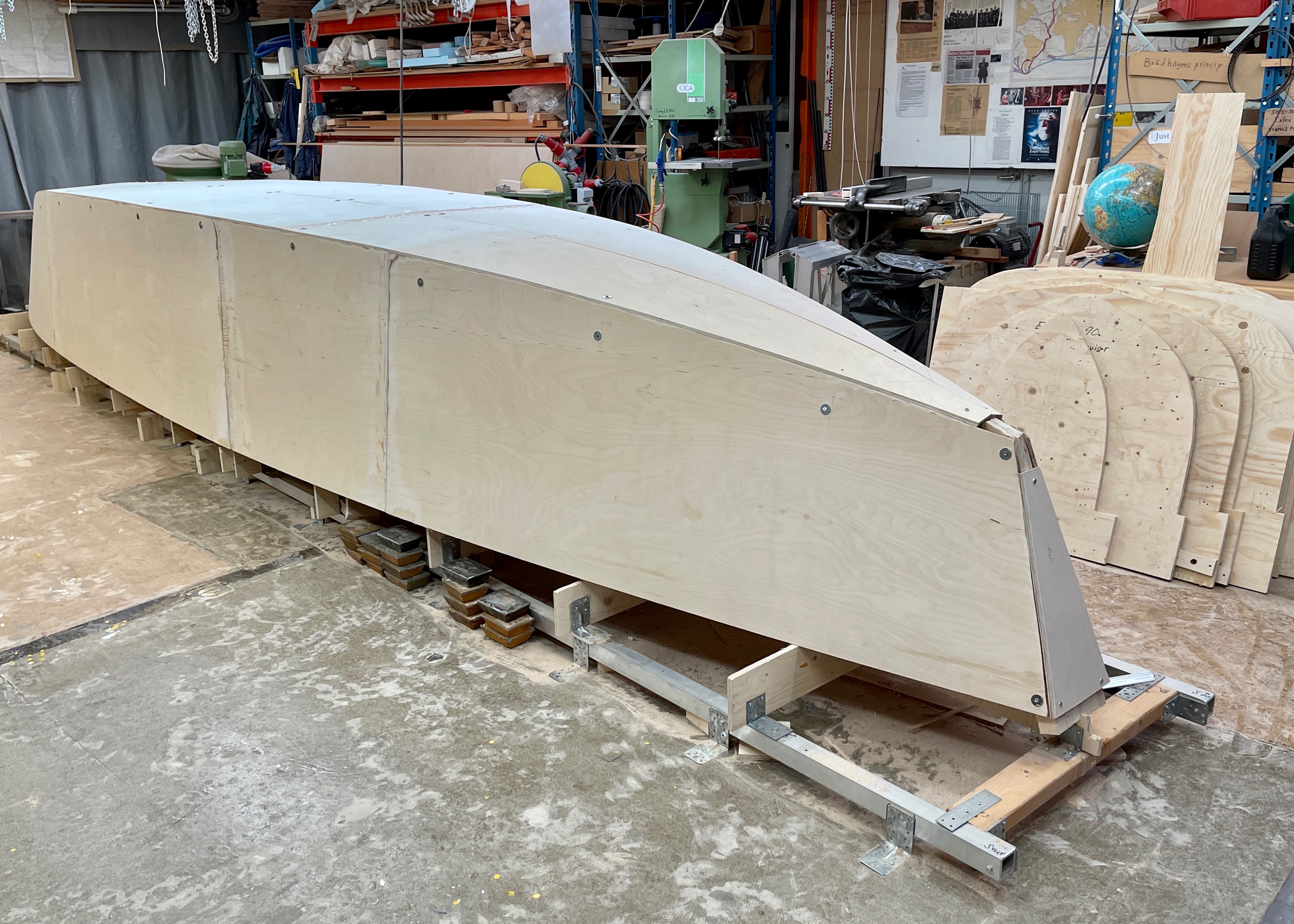
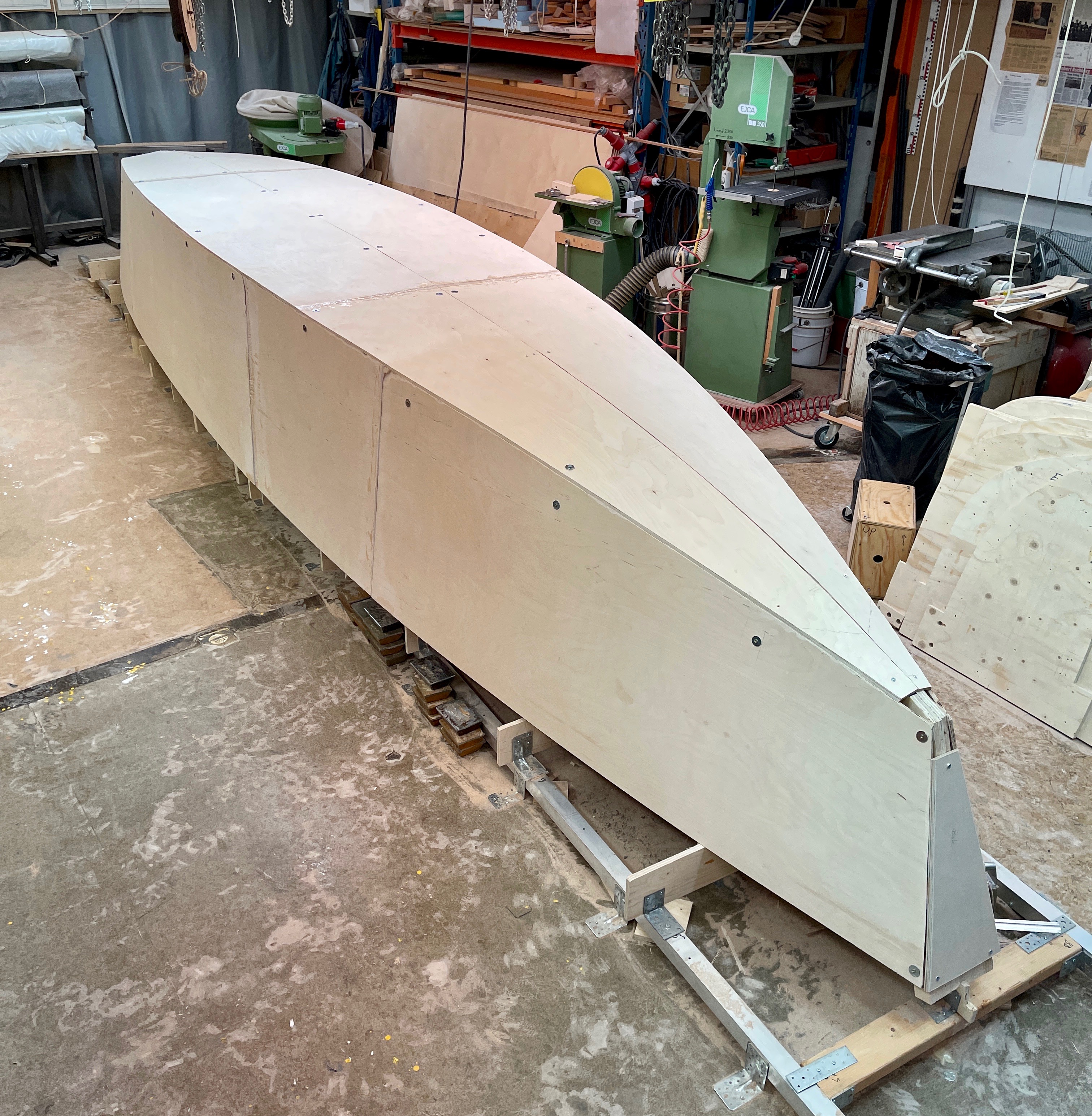
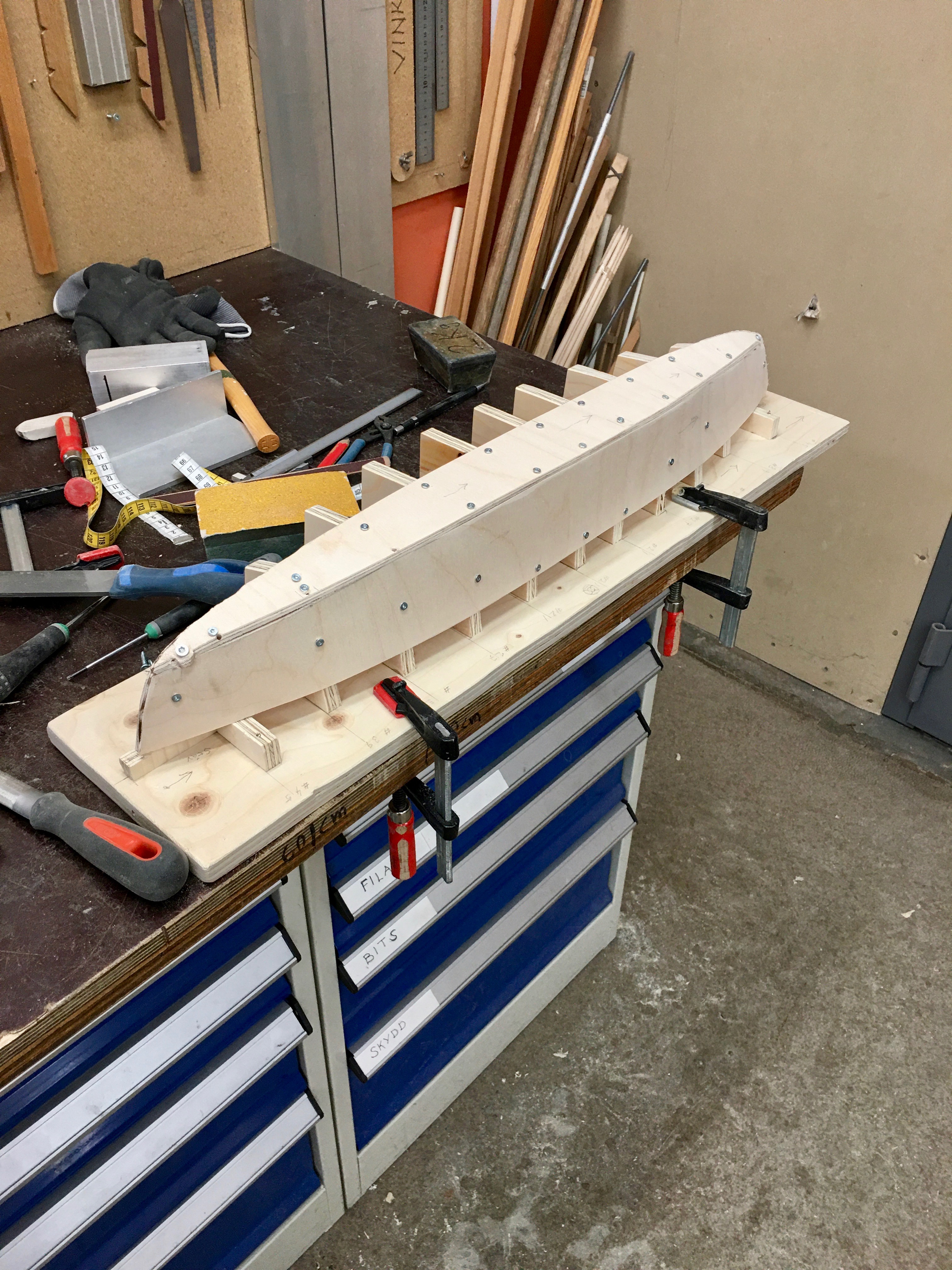
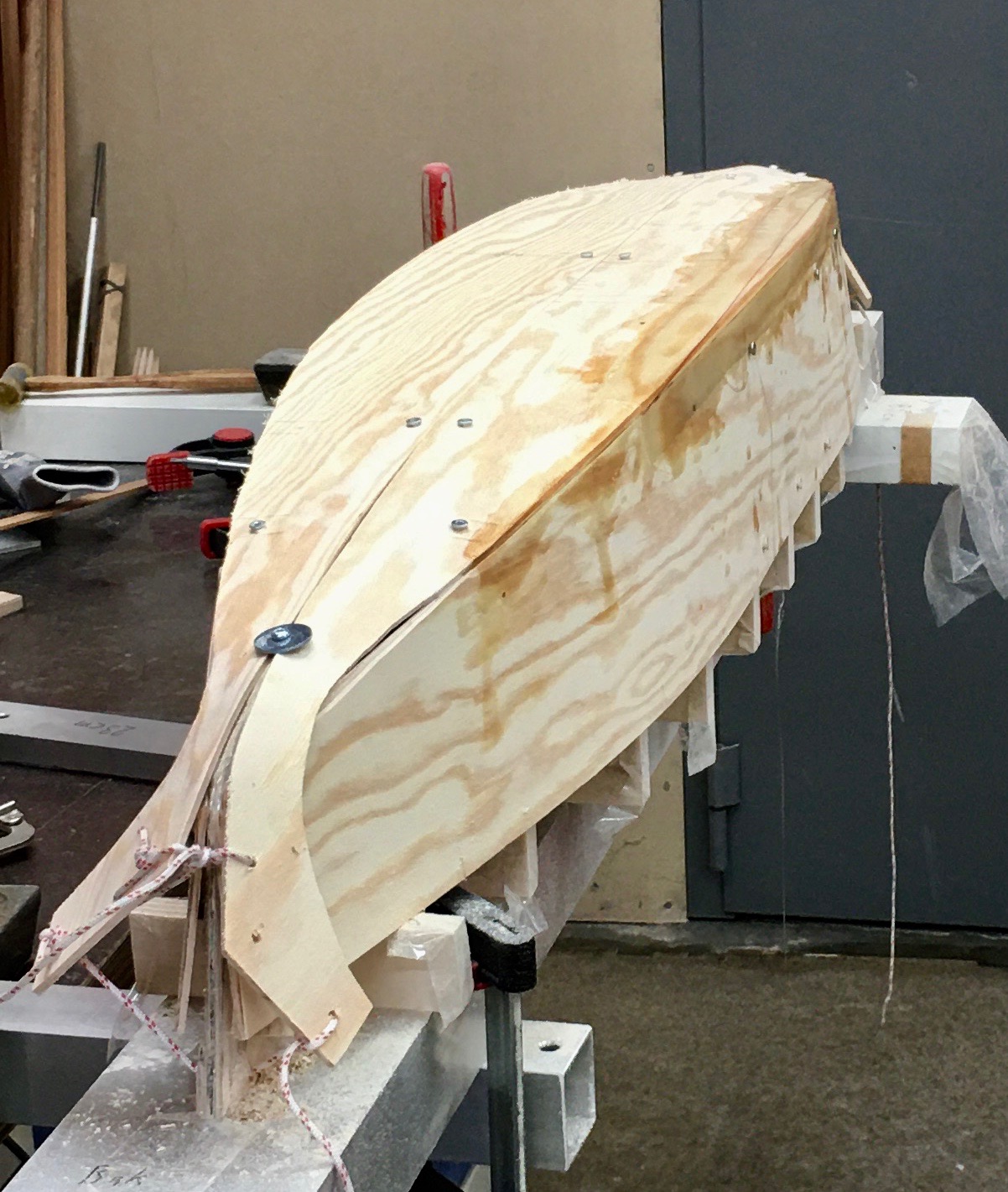
Below are 2 photos of the simpler version of the mockup for Exlex the Canoe Yawl.
The eagle eyed person can see one waterline if he clicks once or twice.
To be continued…
Regards Yrvind
Welcome to Yrvind´s website: small boat designer, builder, sailor & writer
Below are 2 photos of the simpler version of the mockup for Exlex the Canoe Yawl.
The eagle eyed person can see one waterline if he clicks once or twice.
To be continued…
Regards Yrvind
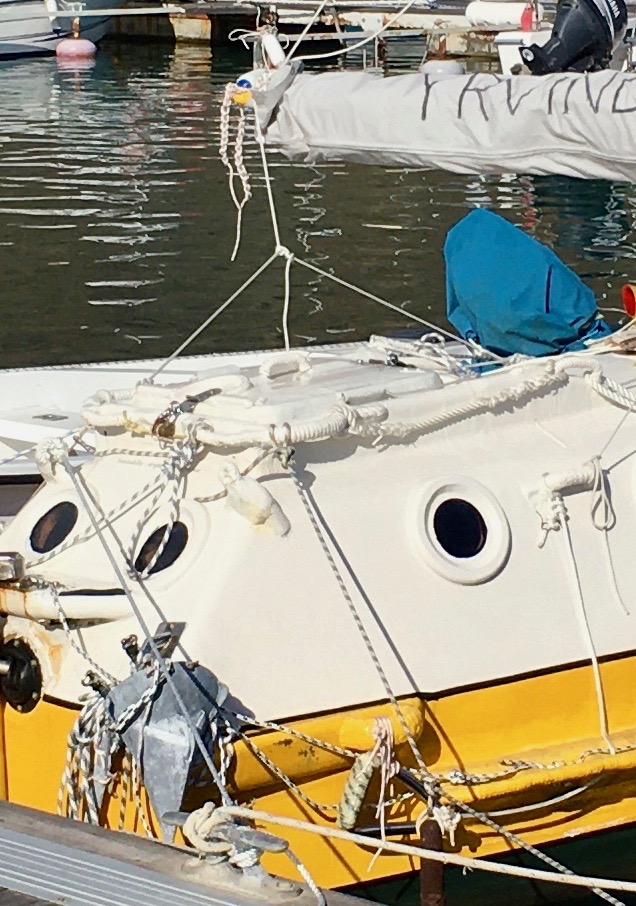
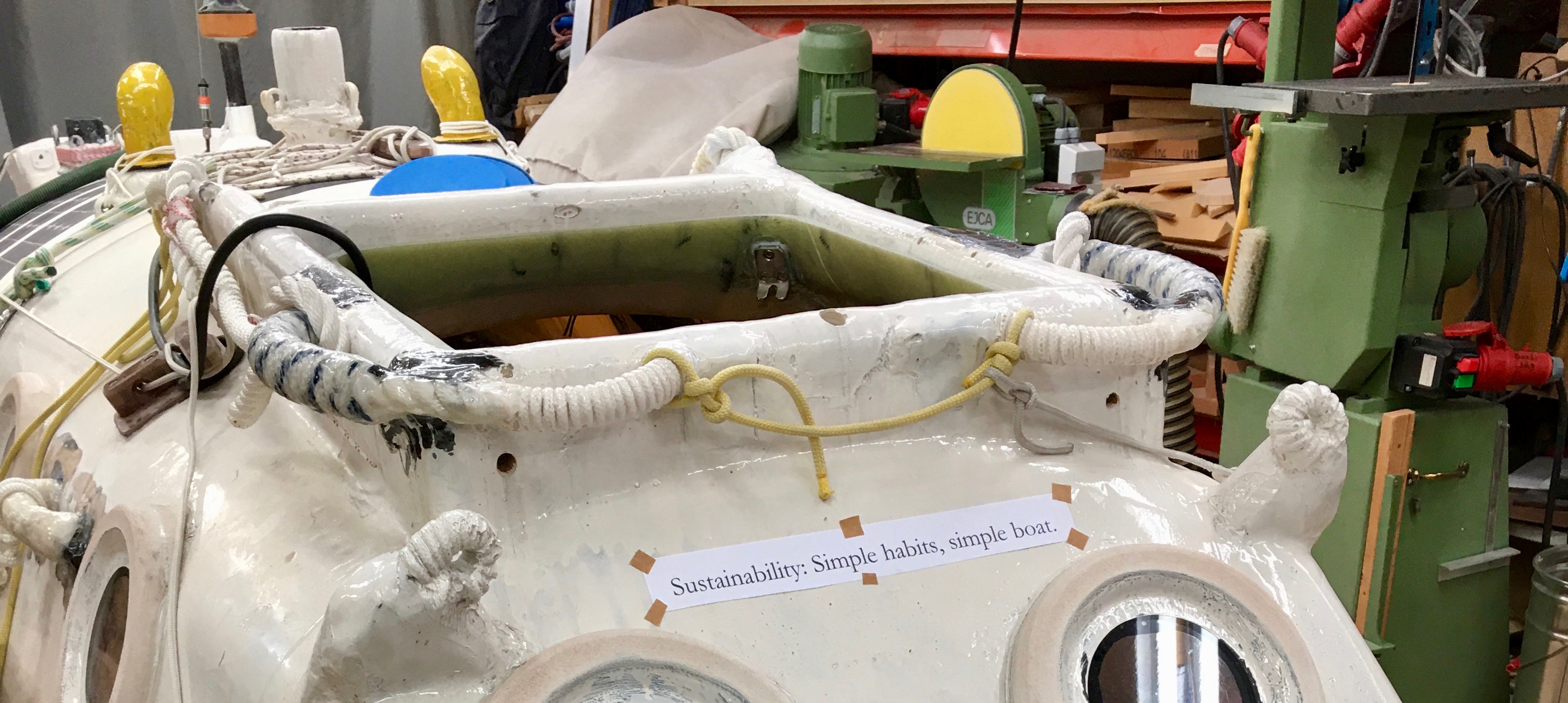
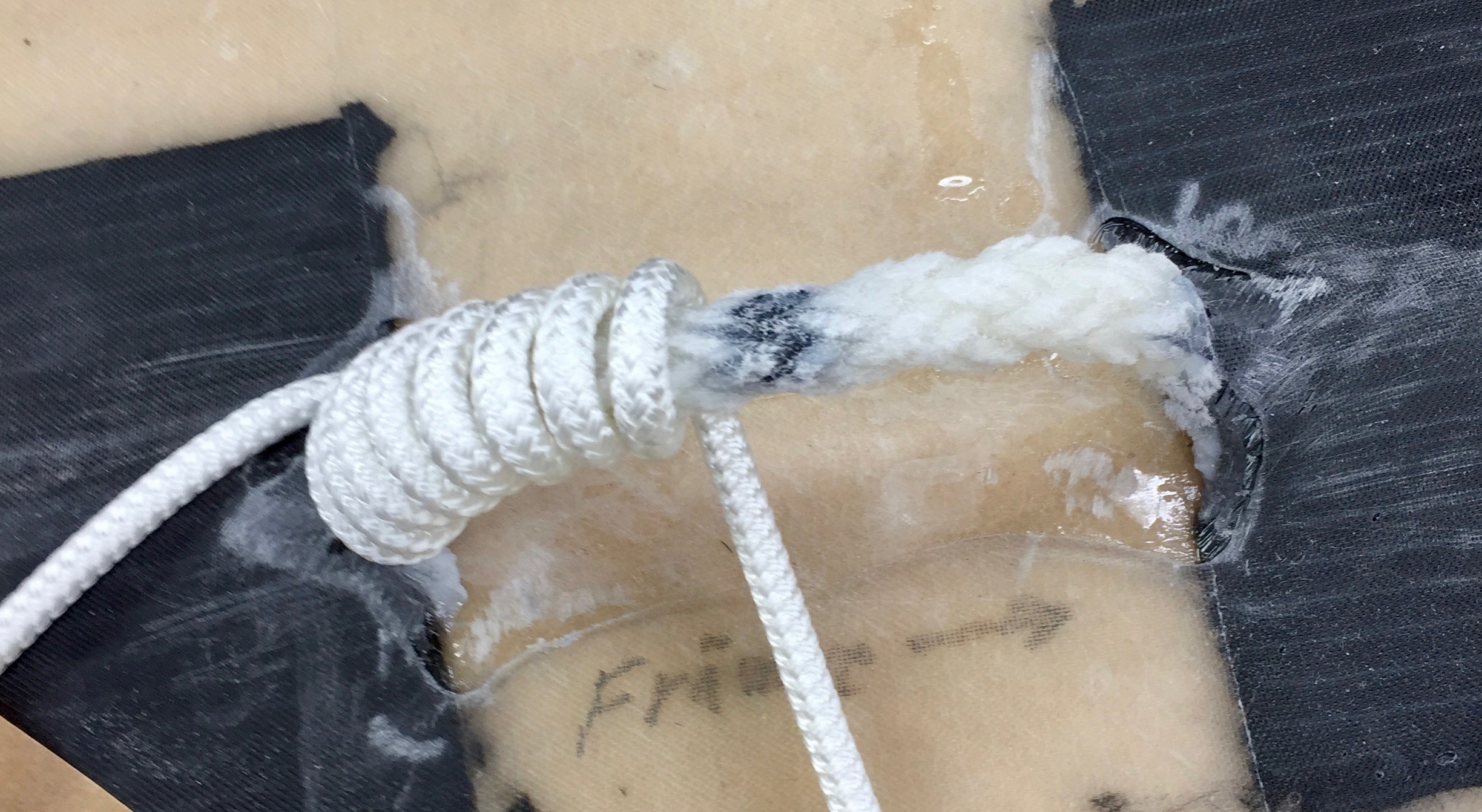
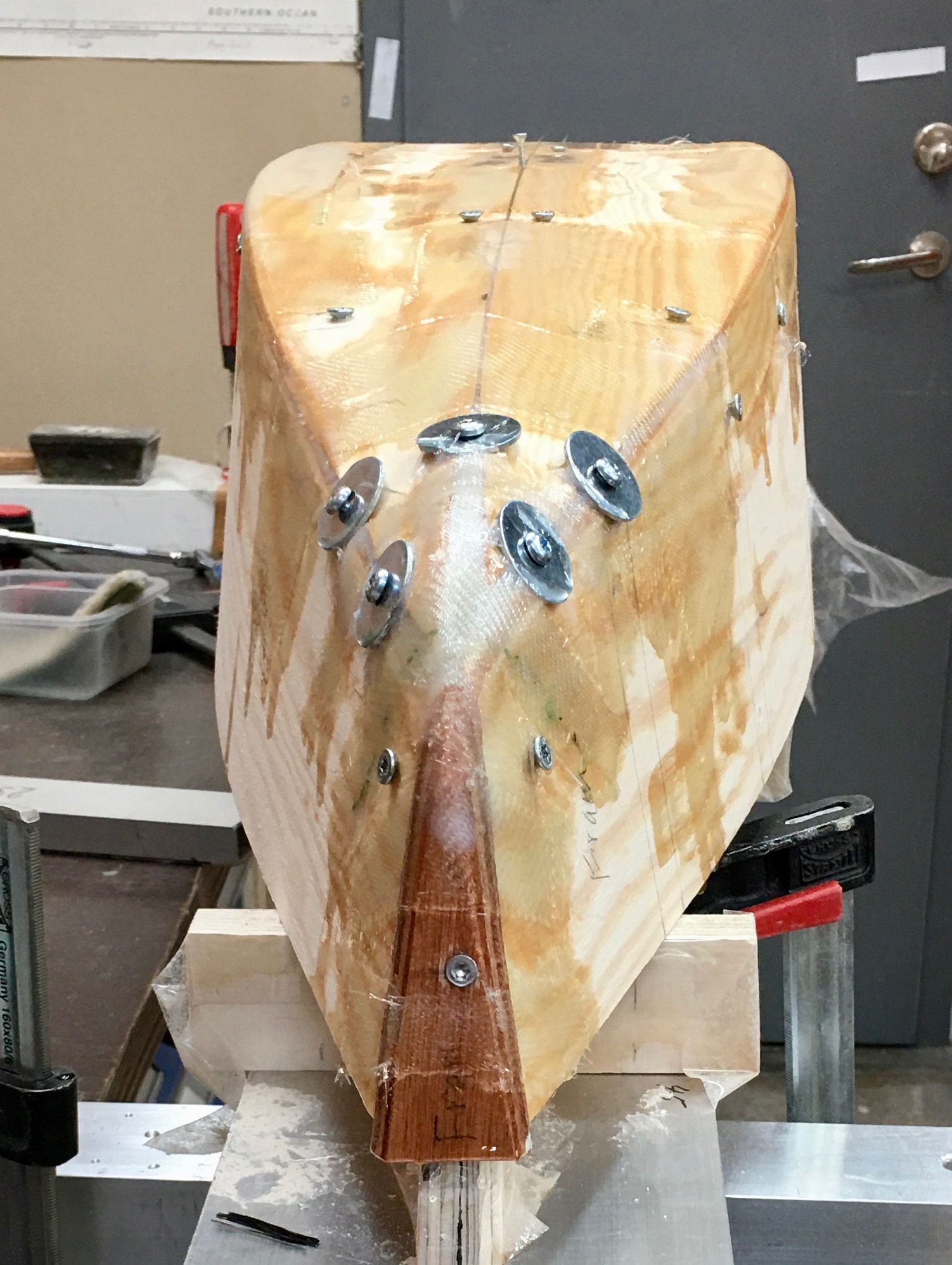
Cleat maybee not but a device for securing a rope. It started as a handhold on Exlex but soon due to its increadible strenght was also often used as a device for securing ropes.
Now on the Exlex the Canoe Yawl it will replace the stainless fittings. Its a fraction of the cost, a fraction of the weighrt, takes a fraction of the time to make and it distributes more easily the forces over a wider area the basic idea of strenght.
Below a few pictures of how its made.

Please Donate.
To be continued…
Regards Yrvind
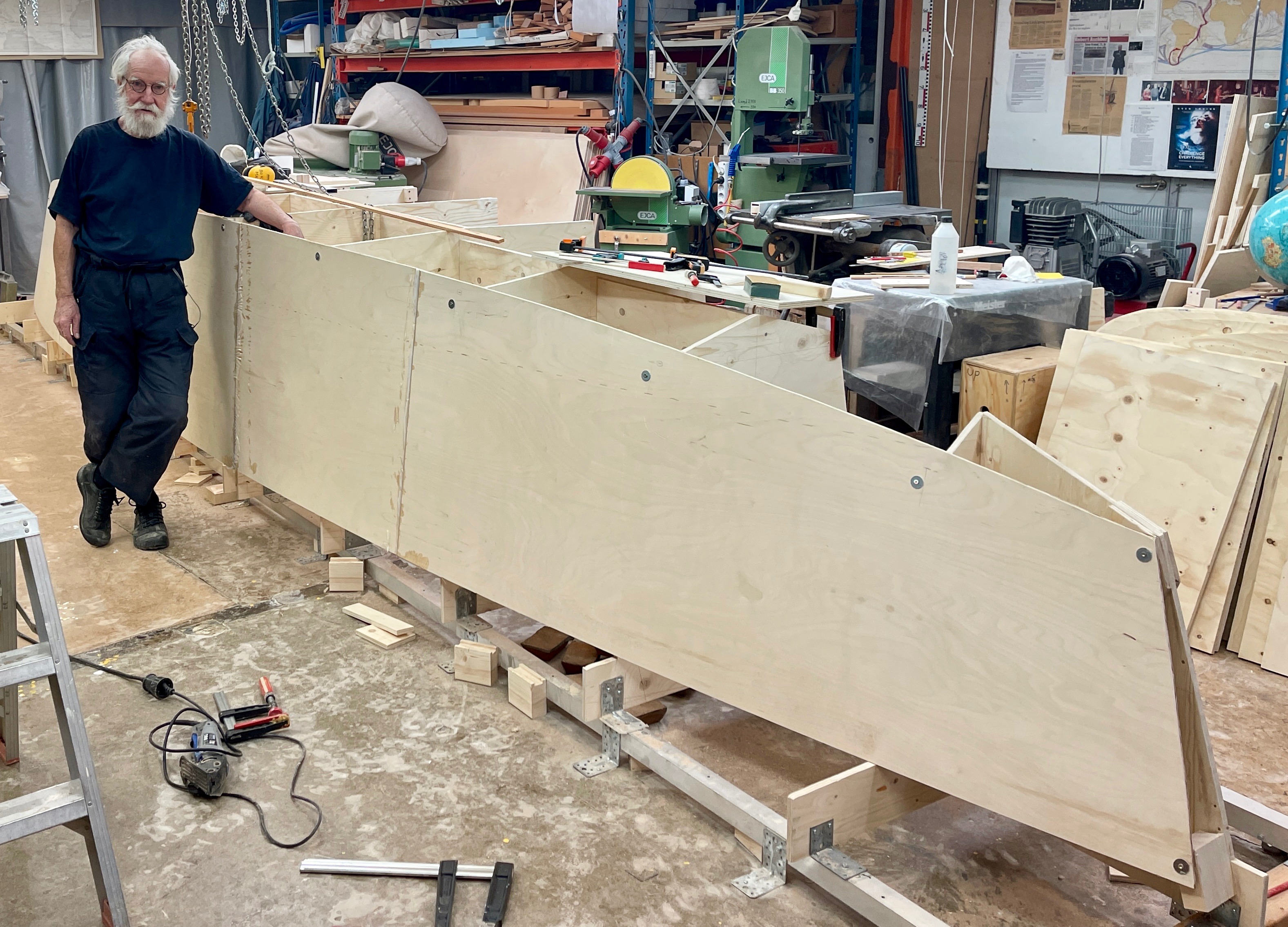
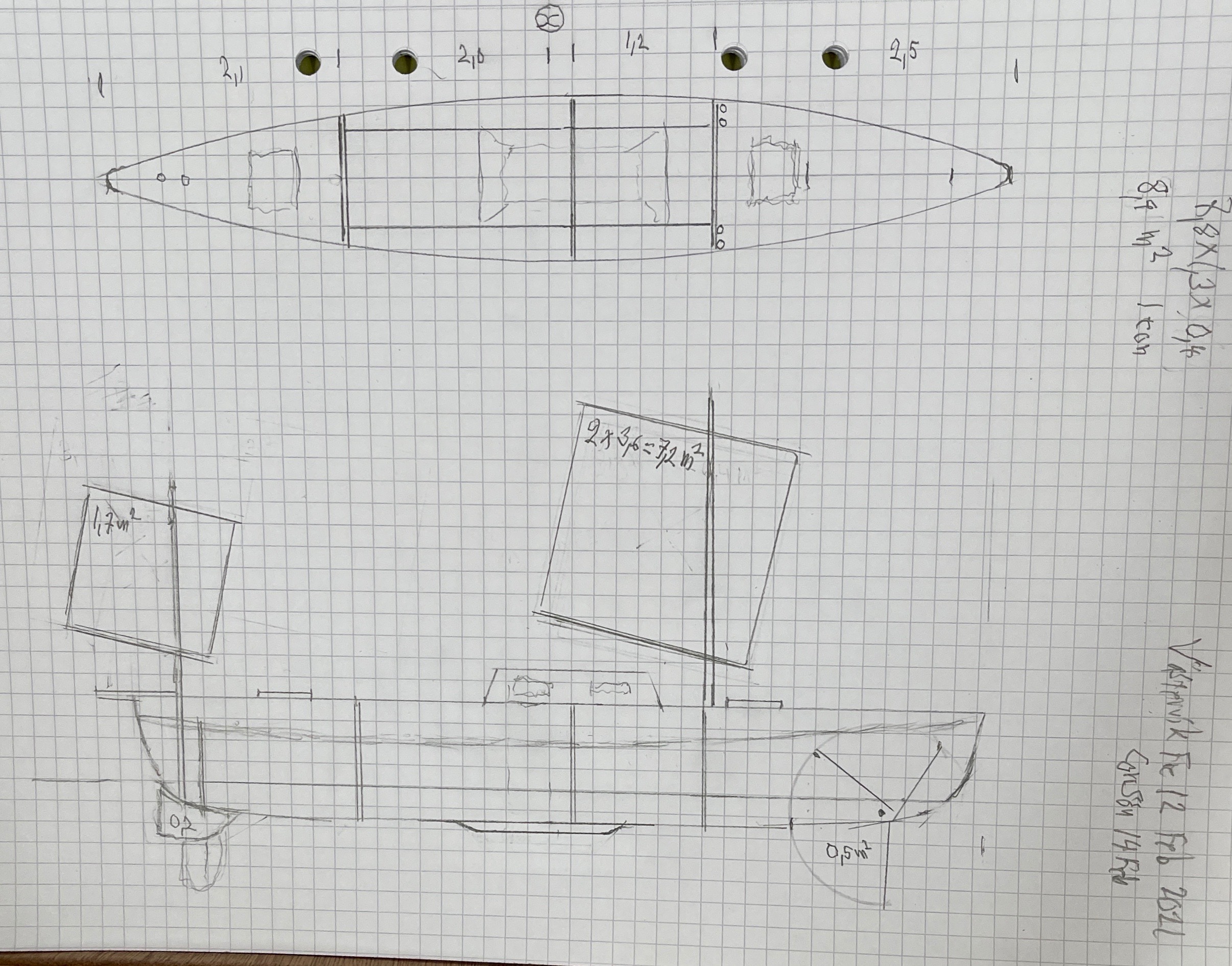
Things work well. The new molds are cut and are on the strongback. One side is scarfed and up. It was a good decision to change my mind. The new version is smaller and simpler. Much is gained by that. I also changer from schooner to yawl rig. The two forward side by side sails are each 3.6 square meter about the size of an Optimist dingy. The mizzen sail is 1.7 square meter.
I plan to have ballasted near vertical chinerunners 20° out and a bow centerboard like Amfibie Bris also a centerboard in the rudder.
Below two photos.
To be continued…
Regards Yrvind.
During the time I was building the mock up of Exlex I had plenty of time to think. At first things went well but as time passed I realised that not only there would be an awful lot of gluing but that that would make the boat more heavy and decrease insulation.
An mock up is a very good thing. Having the boat on even keel and being able to move around in her made me realise that I could do very fine with much less boat. With much less boat I could also reduce the sail area from 12 square meter to 9. Three sails on three masts.
2011 I sailed a small boat 4.8 long with a beam of 1.3 meter to Martinique. Matt Layden had helped me to design her. She had chinerunners.
Now I had the idea of transforming her into a double ender as I had gotten them into my head.
Mentaly I mirrored her for part in her maximum beam. I made her bow a bit more boyant for big waves and to increase the wave creating lenght.
In the early sixties I spent a lot of time studiing mathematics. I learnt about transformations conformal mapping in the complex plane and such thing even if I did far from understand it fully I found it fascinating.
I also read On Growth and Form is a book by the Scottish mathematical biologist D’Archy Wentworth Thompson on transformation in nature.
I relised that almost anything caneasily be transformed.
So Exlex the Canoe Cruiser changed form with the help of the boat I sailed to Martininique.
Below are some illustrations.


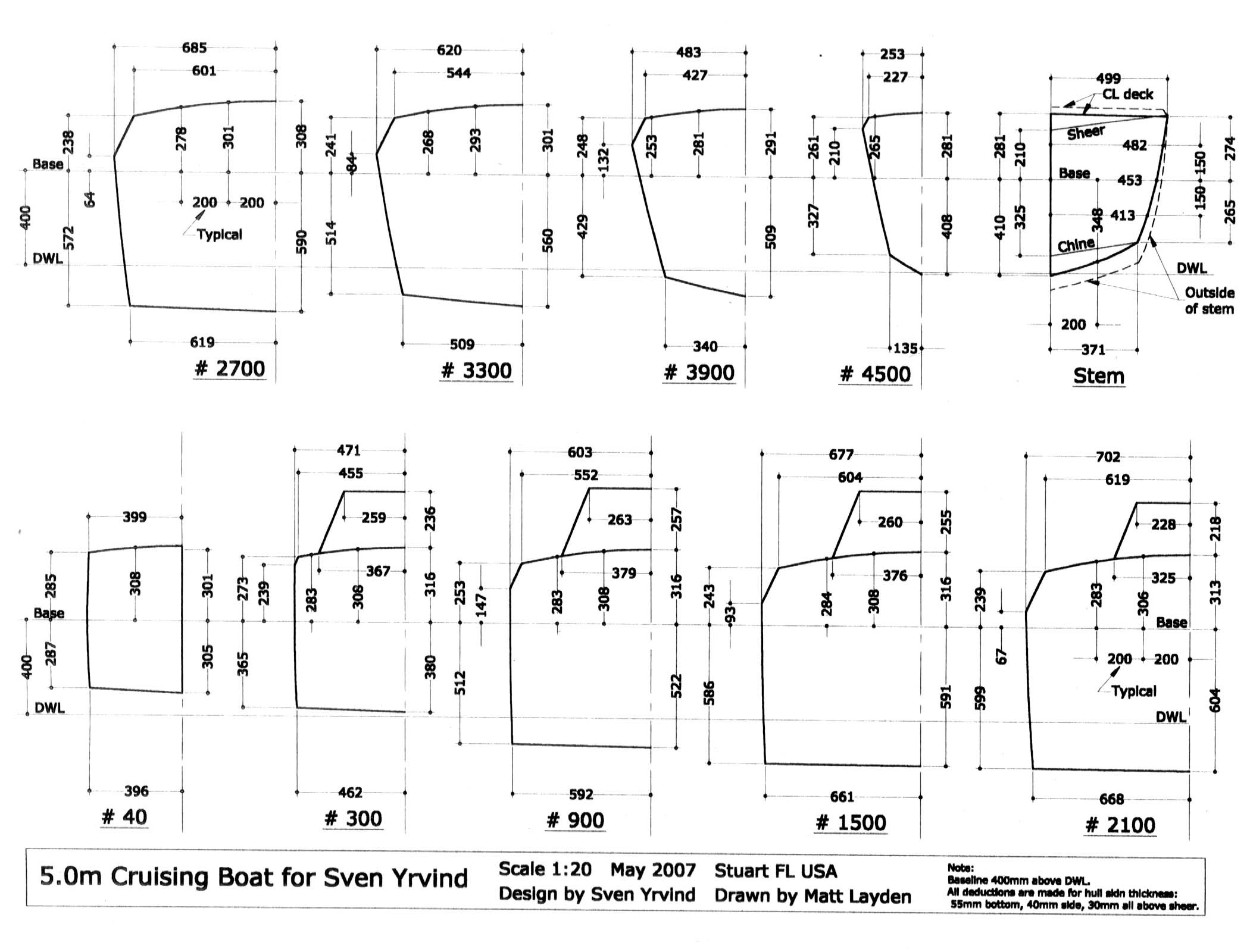
I will use frame
Stem, 450, 390, 330, 270, 210, 210, 210, 270, 330, 390, 450, stem. Spacing them 60 centimeters. Horizontal numbers will be reduced by multiplication by 0.8 to get a narrower boat. Vertical numbers are the same for the hull. Modifiying a bit as it pleases my eye.
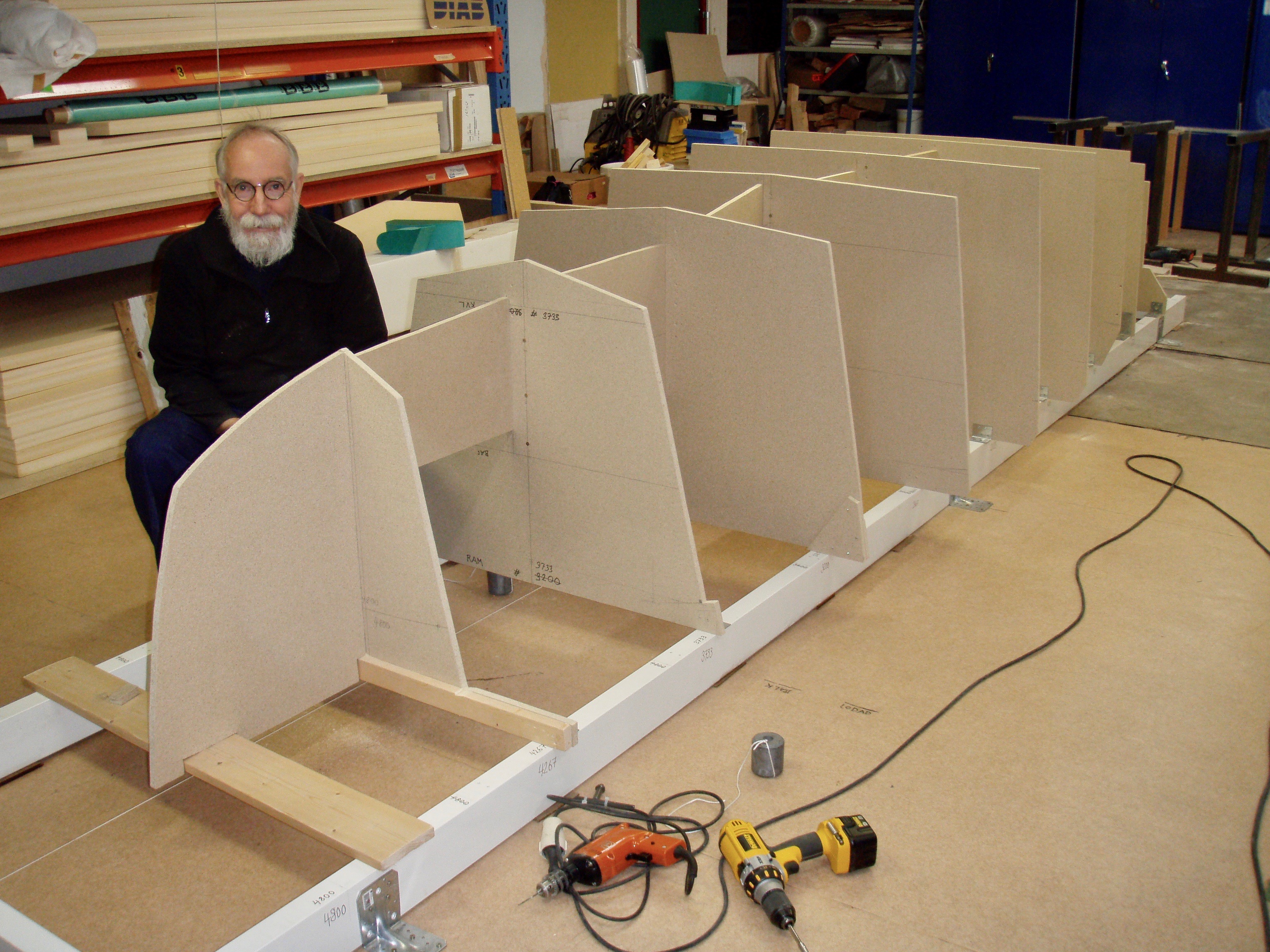
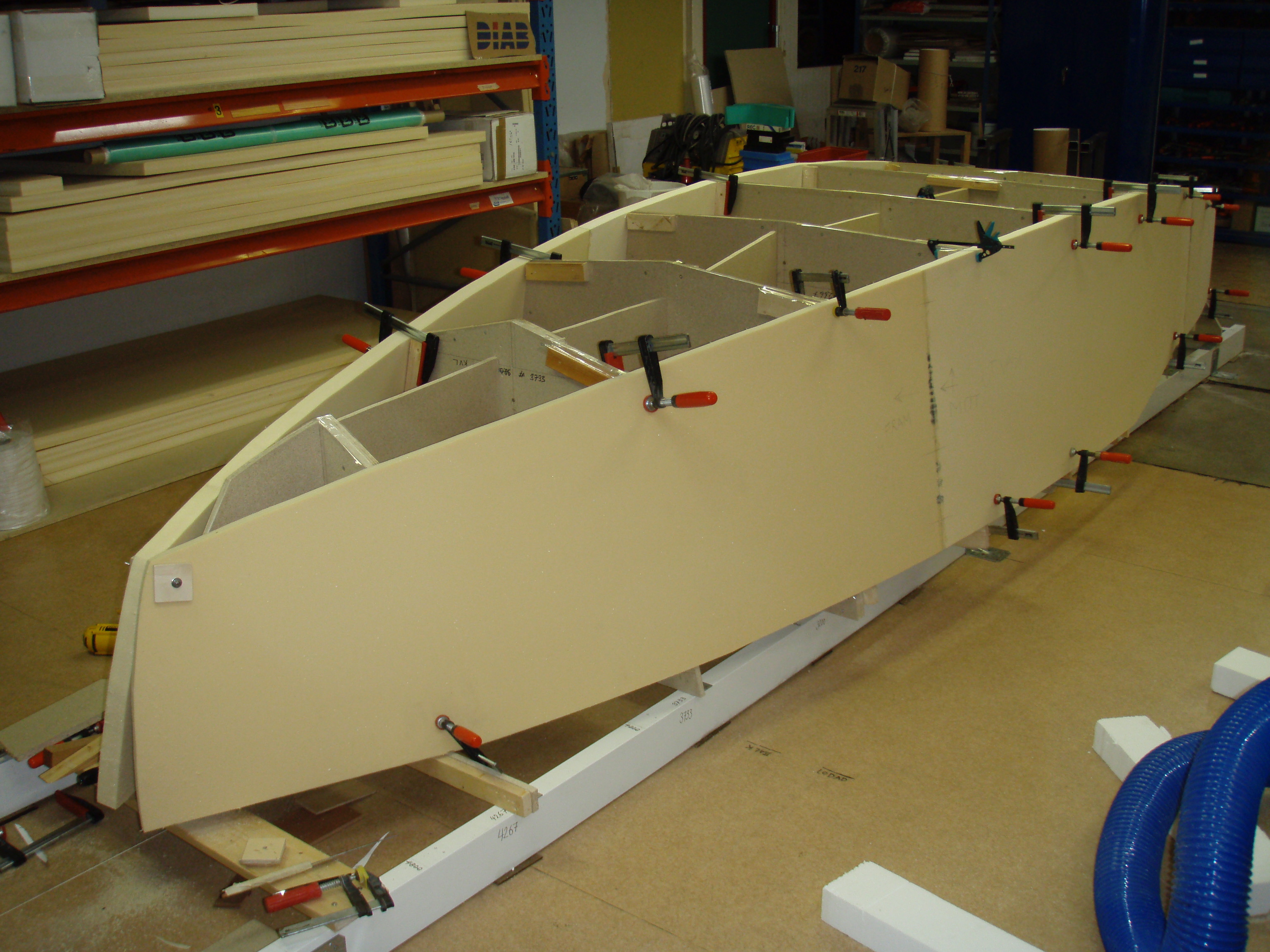
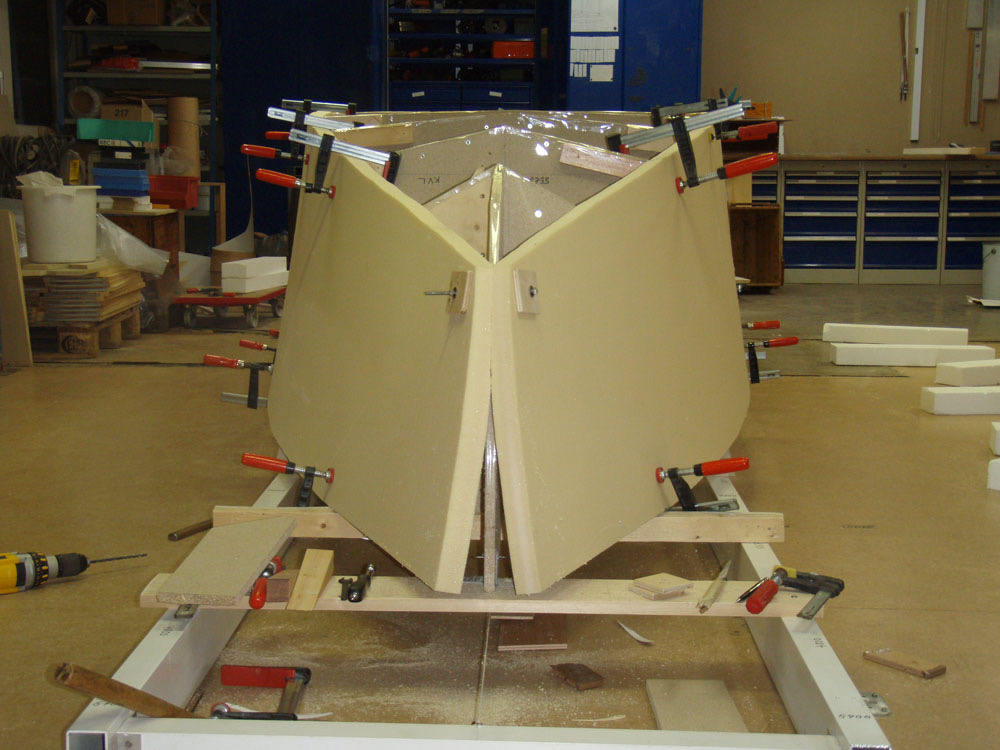
Six beam long double ended plywood boat 7.2 X 1.2 are not common but, 1975 in New England I saw an International 110 designed 1939 – the same year I was born – by Ray Hunt. It was quite a succes and is still racing. My boat will not be a daysailer. It will have balanced lug rig and its lateral area will consists of near vertical, ballasted chinerunners complemented by a bow centerbord as on my Amphibie Bris of 4.8 long that I sailed to Newfoundland 1989. The two forward masts will be side by side as in my 2018 sail to Madeira. It was an excellent rig.
https://en.wikipedia.org/wiki/International_110
If you enjoy my site please support by a donation.
To be continued…
Regards Yrvind.
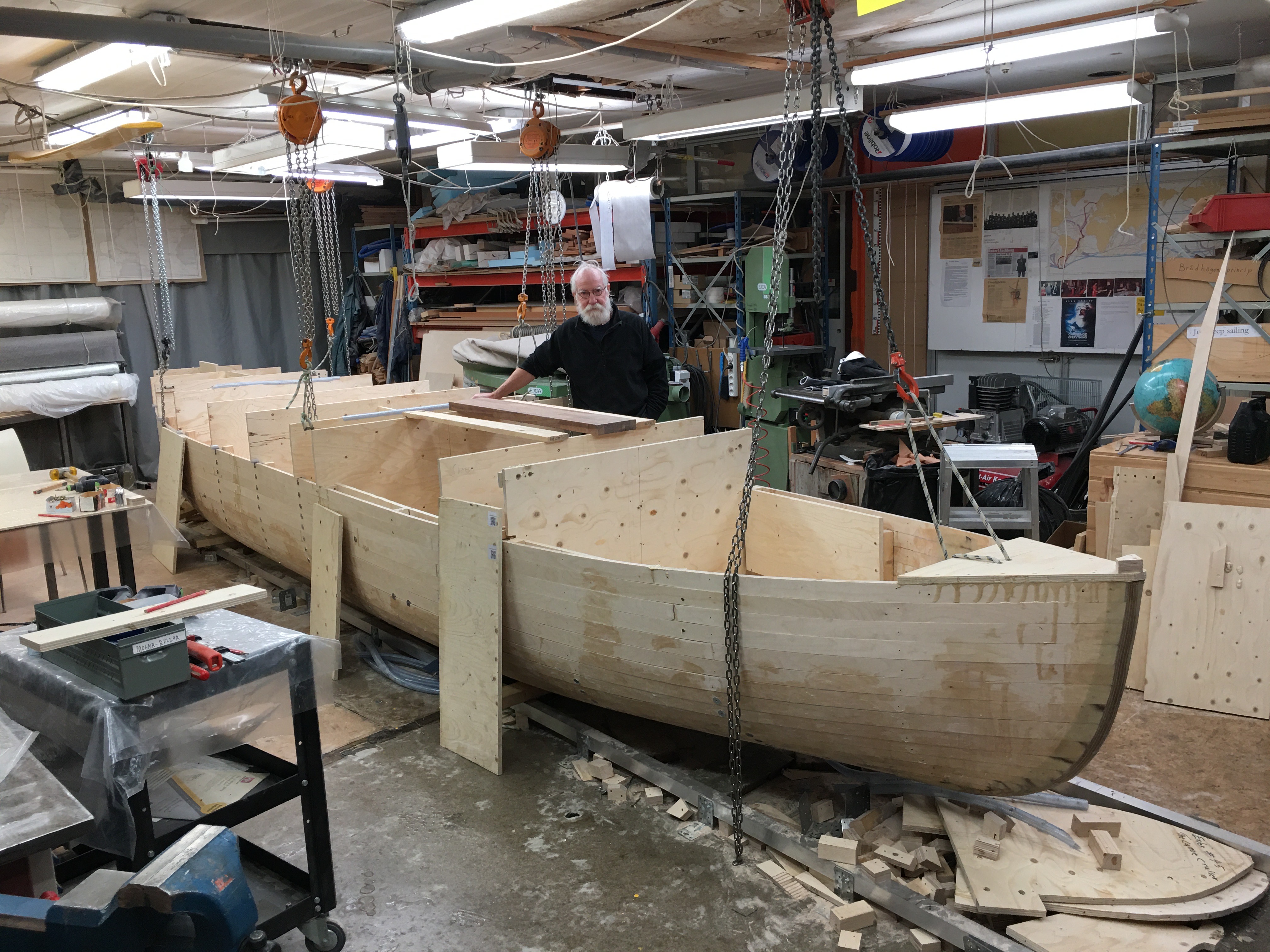
The mock up of Exlex the Canoe Cruiser is now on even keel and I have started mocking up the interior. When moving about inside the boat I realised that there is more space than I need. I thuse made an inner planking reducing the inside beam by about 7 cm on each side. I also moved the bulkheads closer. This is the glory of mockup. Like a writer doing a draft. There is nothing like mowing about in three dimensional space. Therefore I will reduce the size from 7.8 X 1.3 to 7.2 X 1.2 meters about.
Below are 3 pictures.
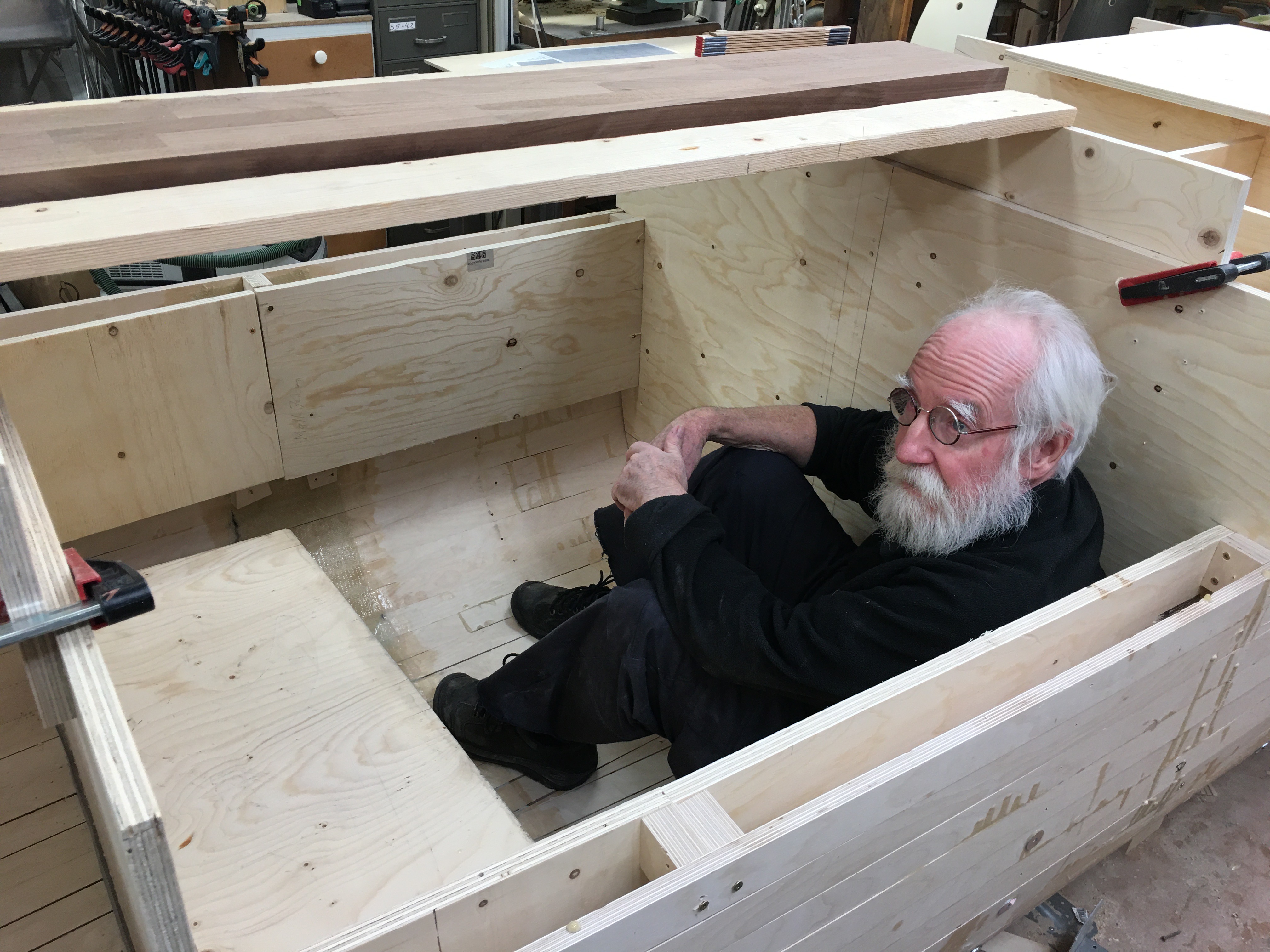
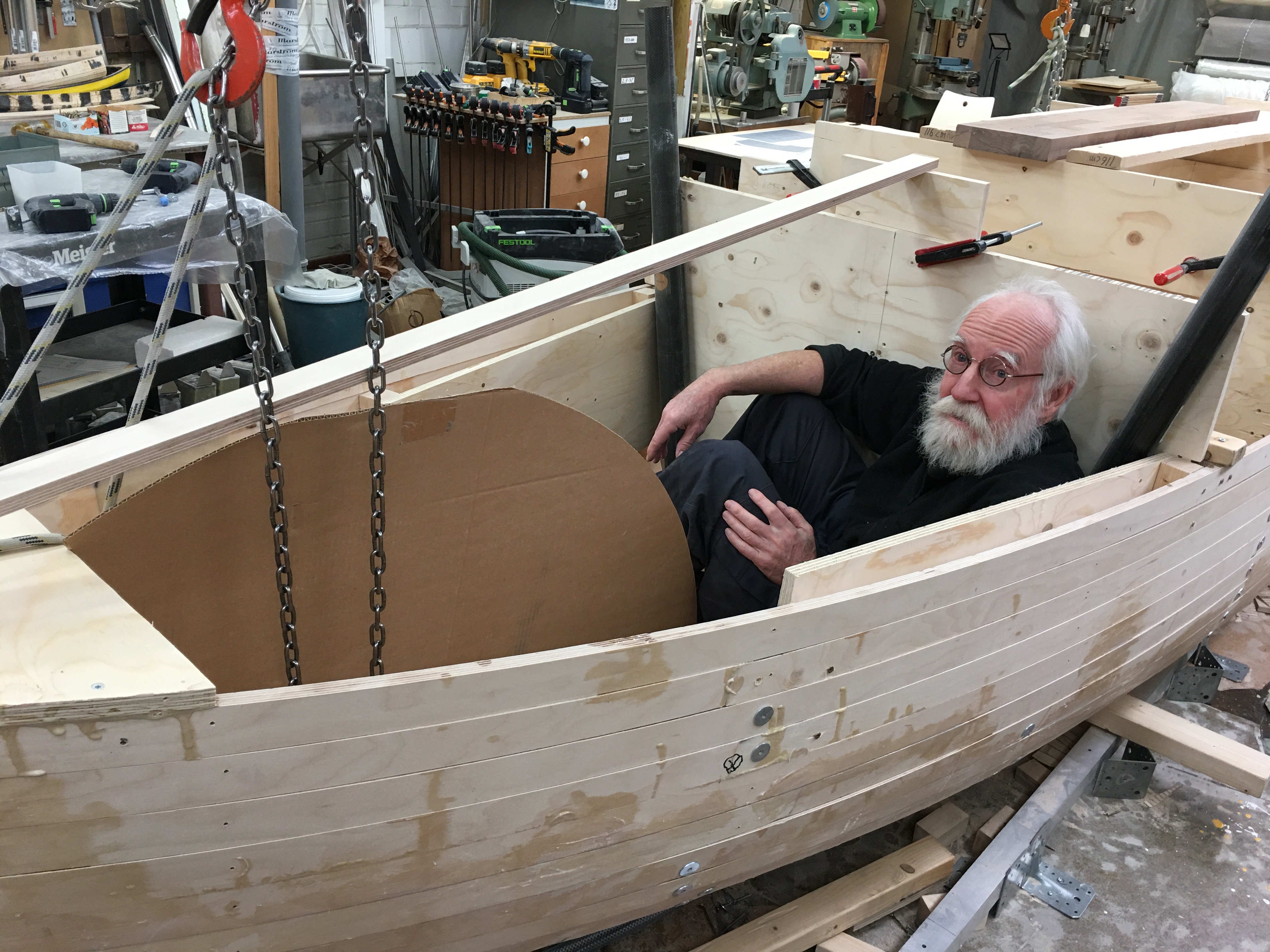
To be continued…
Regards Yrvind.